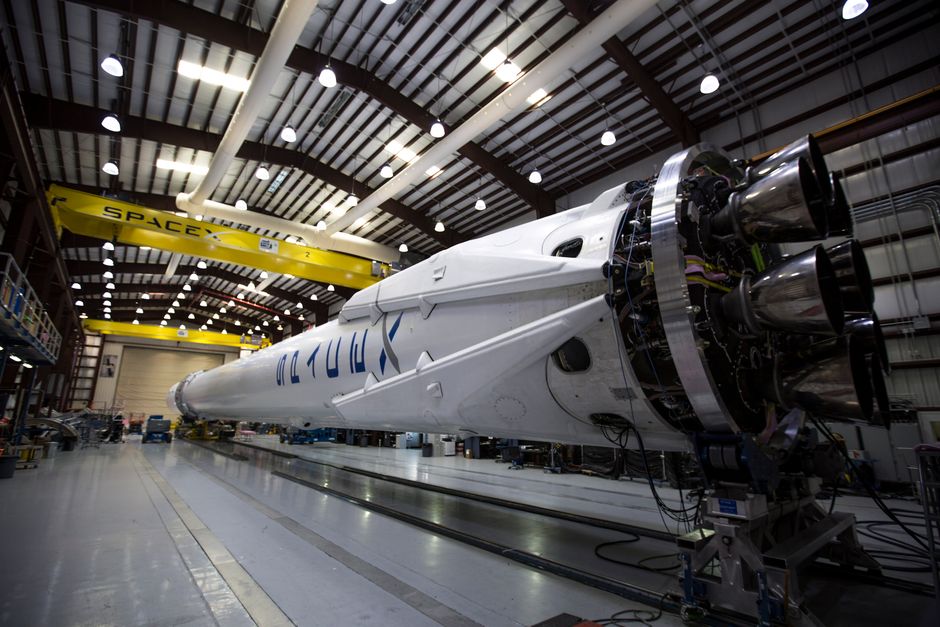
The primary constraint on space-based economic expansion is not physics; it is the tyranny of the rocket equation. For decades, we have treated space transit as a fuel-intensive chemical combustion problem. This is a strategy of diminishing returns. As mass requirements increase, the fuel required to lift that fuel grows exponentially, eventually hitting a hard wall of operational inefficiency. The transition from chemical rockets to beam-propulsion infrastructure represents a shift from carrying your own energy to receiving it on demand.
\n\n
In high-performance organizations, we recognize that the most effective systems are those that decouple energy delivery from the payload. By moving the power source off the vehicle and into a fixed, high-output orbital or terrestrial array, we fundamentally alter the cost-per-kilogram calculus. This is not just an engineering pivot; it is a shift in strategic leverage that changes how we approach long-term mission planning and asset deployment.
\n\n
Decoupling Energy from Payload
\n
Beam propulsion—specifically laser or microwave thermal propulsion—relies on high-intensity energy beams directed at a vehicle’s heat exchanger or sail. This infrastructure allows a craft to discard the heavy fuel tanks that typically account for the vast majority of a rocket’s launch mass. When you remove the fuel, you increase the payload capacity by an order of magnitude.
\n\n
From a operational excellence perspective, this mirrors the transition from localized, siloed computing to cloud-based distributed infrastructure. Just as cloud computing allowed companies to scale without maintaining massive on-site server farms, beam-propulsion infrastructure allows spacecraft to operate without carrying massive on-board energy reserves. The vehicle becomes a lighter, more agile platform capable of higher delta-v maneuvers that were previously impossible with chemical propulsion.
\n\n
The Infrastructure Investment Horizon
\n
Building this infrastructure requires a shift in decision-making. It is a high-CAPEX, high-complexity initiative that offers low marginal cost per unit of transit over time. Leaders must view this not as a single project, but as the foundational layer of a new space economy. The return on investment is found in the ability to rapidly deploy constellations, maintain orbital assets, and perform deep-space logistics at a fraction of current costs.
\n\n
High-Performance Logistics and Execution
\n
The true power of beam-propulsion infrastructure lies in its ability to enable high-cadence, autonomous logistics. When energy is transmitted via beam, we move toward a model of constant connectivity. This is the essence of execution at scale: creating a system where the flow of assets is continuous rather than bursty.
\n\n
In our current model, space transit is a \”campaign\”—a months-long preparation for a single event. With beamed power, the infrastructure acts as a permanent utility. This allows for:
\n
\n
Precision Timing: Adjusting trajectories in real-time based on AI-driven orbital mechanics.
\n
Payload Optimization: Focusing resources on mission-critical instruments rather than propellant.
\n
Sustainability: Reducing the debris and atmospheric impact associated with constant chemical stage disposal.
\n
\n\n
The Strategic Implications for Space Leadership
\n
Leaders in the aerospace sector must distinguish between incremental improvements to existing platforms and the infrastructure that will render those platforms obsolete. Investing in traditional heavy-lift chemical rockets is a short-term necessity, but the long-term competitive advantage lies in the development of beamed-energy grids.
\n\n
Those who control the beam infrastructure will effectively control the orbital \”lanes\” of trade and transit. Much like the railroad barons of the 19th century, the organizations that build the transmission infrastructure will dictate the terms of access for the entire space-based economy. This is a classic case of high-performance thinking: identifying the bottleneck, removing it through technological disruption, and securing the control point of the new system.
\n\n
The Path to Integration
\n
Integration of this technology requires a modular approach. We must first validate the energy-to-propulsion transfer efficiencies at a small scale before scaling to heavy-lift infrastructure. This mirrors the iterative methodology used in leadership: test the hypothesis, refine the mechanism, and scale only when the reliability of the system is proven. The technical hurdles—beam divergence, targeting accuracy, and thermal management—are significant, but they are solvable through current advances in adaptive optics and AI-governed beam steering.
\n\n
The shift is inevitable. As we look to move beyond Earth orbit, our dependence on chemical combustion will become the primary limiting factor for progress. By shifting our focus to the infrastructure of energy delivery, we unlock the next phase of human and machine activity in space.